1. HVLS Ceiling Fans – The Heavy Lifters
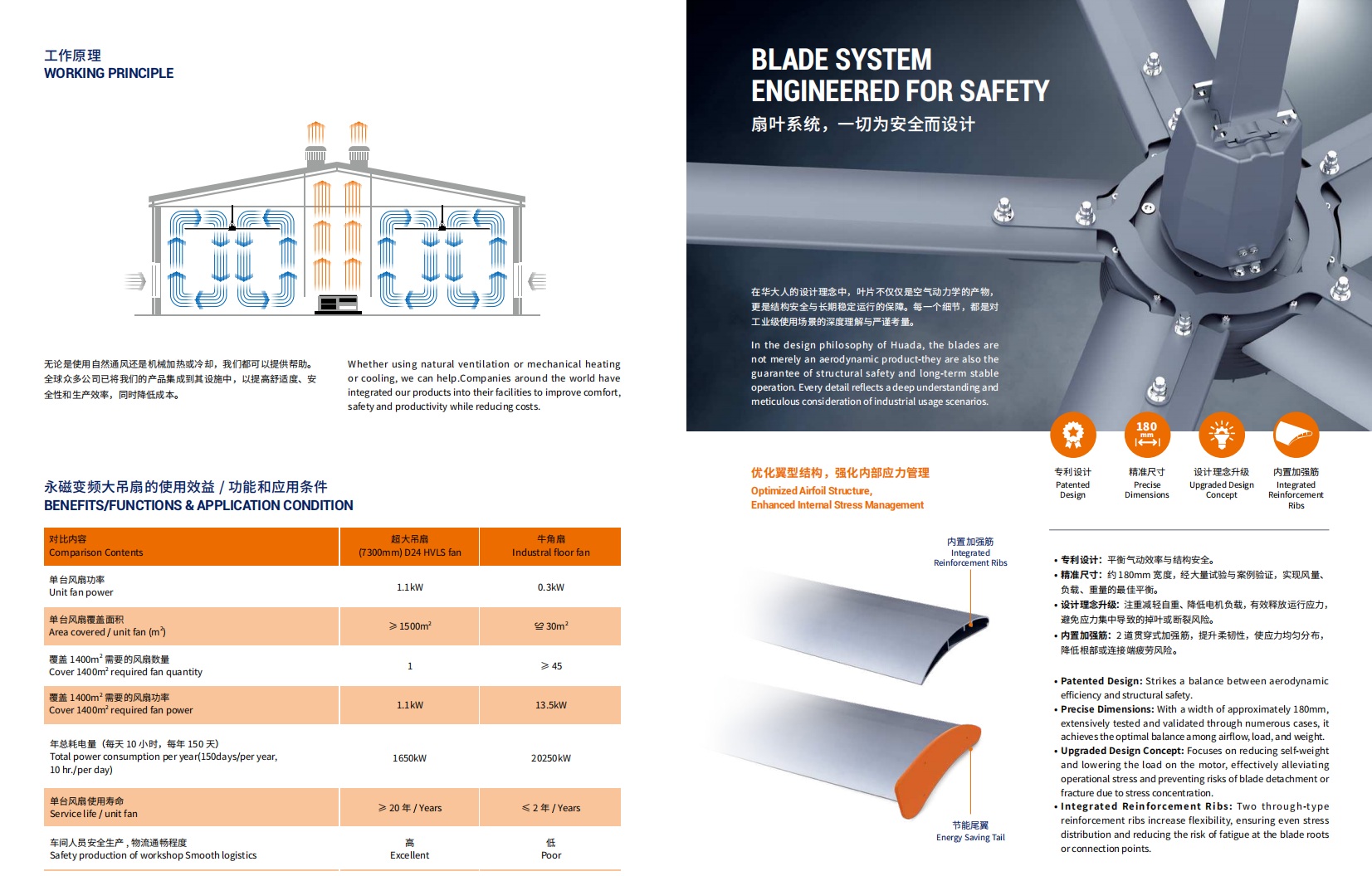
GTFI HDS Series are HVLS (High Volume Low Speed) ceiling fans designed for large industrial spaces.
HDS-3.0 to HDS-7.3
Diameter: 3.0-7.3m
Power: 0.37-1.5kW
Coverage: 380-1700㎡
Airflow: 4,000-13,000 m³/min
Noise: ≤38dB
Key Features
PMSM direct-drive motor
5-6 aluminum-magnesium blades
50% energy saving
Centralized touch control
Best for: Factories, warehouses, gymnasiums.
2. Commercial Ceiling Fans
HDS-D Series are smaller ceiling fans for commercial spaces. Diameter: 2.4-3.7m, Power: 0.35kW, Coverage: up to 200㎡, Noise: ≤38dB.
Best for: Restaurants, fitness centers, supermarkets.
3. Portable and Mobile Fans
HDY Series are portable fans with wheels. Diameter: 1.2-2.0m, Power: 0.55-1.0kW, Coverage: 80-260㎡, Tilt angle: -45° to +45°.
Best for: Events, exhibitions, temporary construction.
4. Wall-Mounted and Floor Fans
HDB Series (wall-mounted) and HDS-L Series (floor-standing) are for spaces where ceiling mounting is not possible.
- Wall-mounted: 1.2-2.0m diameter, up to 24m throw distance
- Floor-standing: 3.0-7.3m diameter
5. Outdoor and Garden Fans
AFS Series are weather-resistant fans for outdoor use. Diameter: 2.4-3.7m, IP65 (weatherproof).
Best for: Gardens, courtyards, outdoor dining areas.
Practical Selection Checklist
Industrial air movement and cooling equipment should be selected from the space, heat load, airflow requirement, mounting conditions, and operating environment. A larger fan or air conditioner is not automatically a better solution if airflow distribution, humidity, noise, or installation constraints are ignored.
What to Confirm Before Ordering
- Record floor area, ceiling height, heat sources, occupancy, doors, and natural ventilation before comparing models.
- For fans, compare airflow, air velocity, coverage, speed control, mounting height, and noise rather than diameter alone.
- For cooling equipment, define target temperature, heat load, humidity, refrigerant/cooling method, and available electrical supply.
- Check dust, moisture, corrosive gases, outdoor exposure, and cleaning requirements when selecting protection and construction materials.
- Confirm installation clearances, controls, maintenance access, and whether several smaller units would distribute air more effectively than one large unit.
For a quotation request: For quotation requests, provide room dimensions, application, climate, electrical supply, preferred mounting method, and target operating conditions. This allows suppliers to recommend a suitable configuration rather than simply quoting the largest available model.
Need help matching equipment to a specific application? Provide the operating conditions, required quantity, destination, and key technical requirements when requesting a quotation.
❓ Frequently Asked Questions
A: PMSM fans save up to 50% energy compared to traditional gear-driven fans.
A: 1-year whole unit, 3-year PMSM motor, 18-month controller.
💬 Need help selecting the right fan?
Ask Our Experts →