Irrigation pumps are the backbone of modern agriculture. They deliver water from rivers, wells, or reservoirs to crops. Choosing the right pump ensures efficient water delivery, lower fuel consumption, and reliable operation during critical growing seasons.
1. Types of Agricultural Irrigation Pumps
- Clean water pumps: For clear water from wells, rivers, and reservoirs. GTFI SP series (gasoline) and SP-D series (diesel).
- High-pressure pumps: For long-distance water delivery and hilly terrain. GTFI SHP series.
- Sewage/dirty water pumps: For water with debris or sediment. GTFI STP series.
- Chemical pumps: For fertilizers and pesticides. GTFI SP-DC series.
2. How to Calculate Pump Size
Flow Rate (m³/h)
The amount of water you need per hour depends on your irrigation area and crop requirements. A general rule: 1 hectare needs approximately 50-100m³ per day depending on crop type.
Total Head (m)
Total head = Suction lift + Discharge height + Friction loss. For example: Suction from a well at 5m, discharge to a field at 10m height, with 5m friction loss = 20m total head.
3. Irrigation Pump Sizing Recommendations
| Farm Size | Recommended Flow | Recommended Head | GTFI Model |
|---|---|---|---|
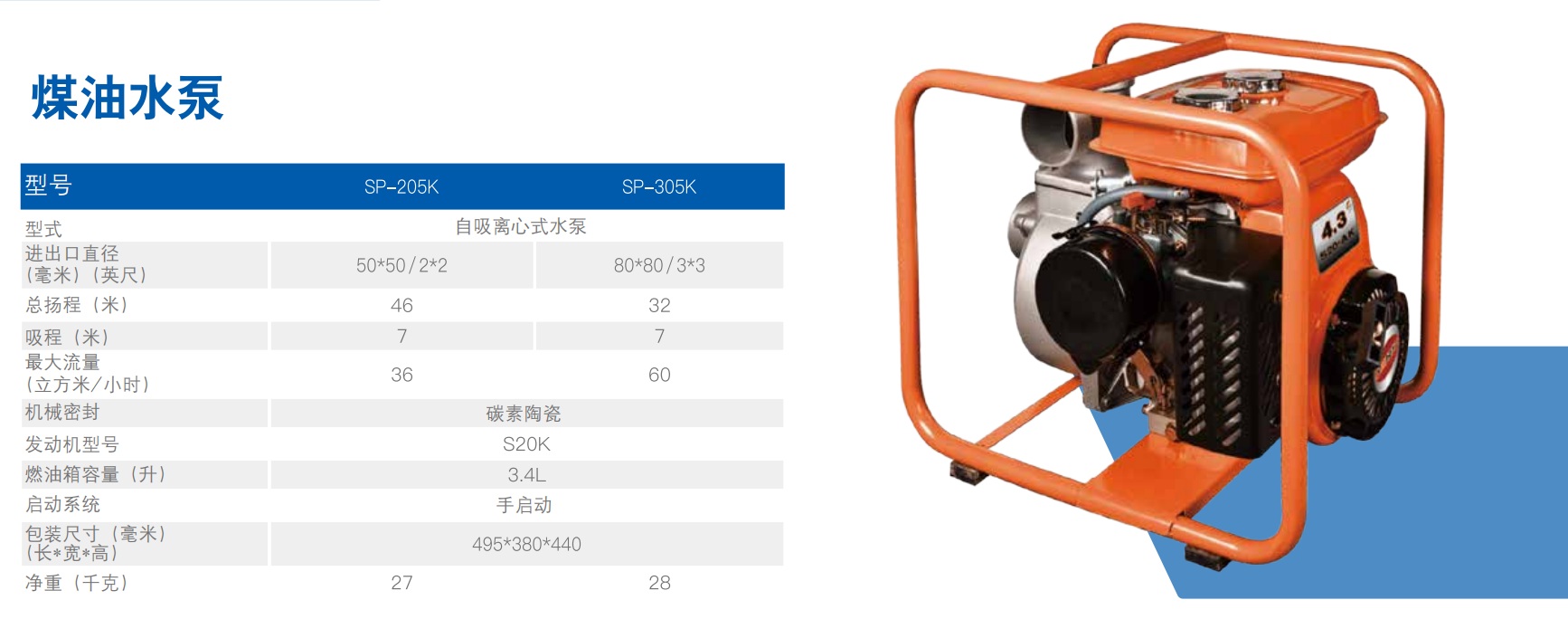
| Small (1-5 hectares) | 10-30 m³/h | 10-30m | SP-205 (2 inch), SP-305 (3 inch) |
| Medium (5-20 hectares) | 30-80 m³/h | 20-50m | SP-405 (4 inch), SHP80DEI (3 inch) |
| Large (20+ hectares) | 80-200+ m³/h | 30-80m | SP-805BE-1 (8 inch), SHP100DEI (4 inch) |
4. Gasoline vs Diesel Irrigation Pumps
- Gasoline: Lower cost, lighter, quieter. Best for small farms and occasional use. GTFI SP series.
- Diesel: More fuel-efficient, longer lifespan, higher torque. Best for large farms and daily use. GTFI SP-D series.
5. Key Features to Look For
- Self-priming: Allows the pump to draw water from below ground level
- Cast iron construction: Durability for agricultural environments
- Corrosion resistance: Important for saltwater or chemical applications
- Fuel efficiency: Lower operating costs over time
Practical Selection Checklist
Pump and valve selection should start with the fluid and the required flow or pressure conditions. Materials, seals, temperature, solids content, corrosion, and operating cycle can be just as important as nominal size.
What to Confirm Before Ordering
- Define required flow rate, pressure or head, suction conditions, and the operating range rather than one single nominal point.
- Identify the fluid, temperature, viscosity, solids content, corrosiveness, and whether the service is clean, abrasive, or sanitary.
- For valves, specify the control or isolation duty, pressure class, connection standard, body material, seat/seal material, and actuation.
- Check motor power, efficiency, NPSH or suction conditions, installation orientation, and maintenance access for pumps.
- Confirm local pipe standards, replacement parts, seals, and compatibility with the existing system before purchase.
For a quotation request: For quotation requests, provide fluid type, flow, head/pressure, temperature, pipe size, material preference, connection standard, and quantity. A simple system diagram can remove significant ambiguity.
Need help matching equipment to a specific application? Provide the operating conditions, required quantity, destination, and key technical requirements when requesting a quotation.
❓ Frequently Asked Questions
A: Most GTFI agricultural pumps have a maximum suction lift of 8 meters.
A: Oil changes every 250-500 hours. Check the impeller for wear every season.
A: Yes, but it's more cost-effective to use a clean water pump for irrigation and a chemical pump for fertilizer application.
💬 Need help sizing an irrigation pump for your farm?
Talk to Our Experts →