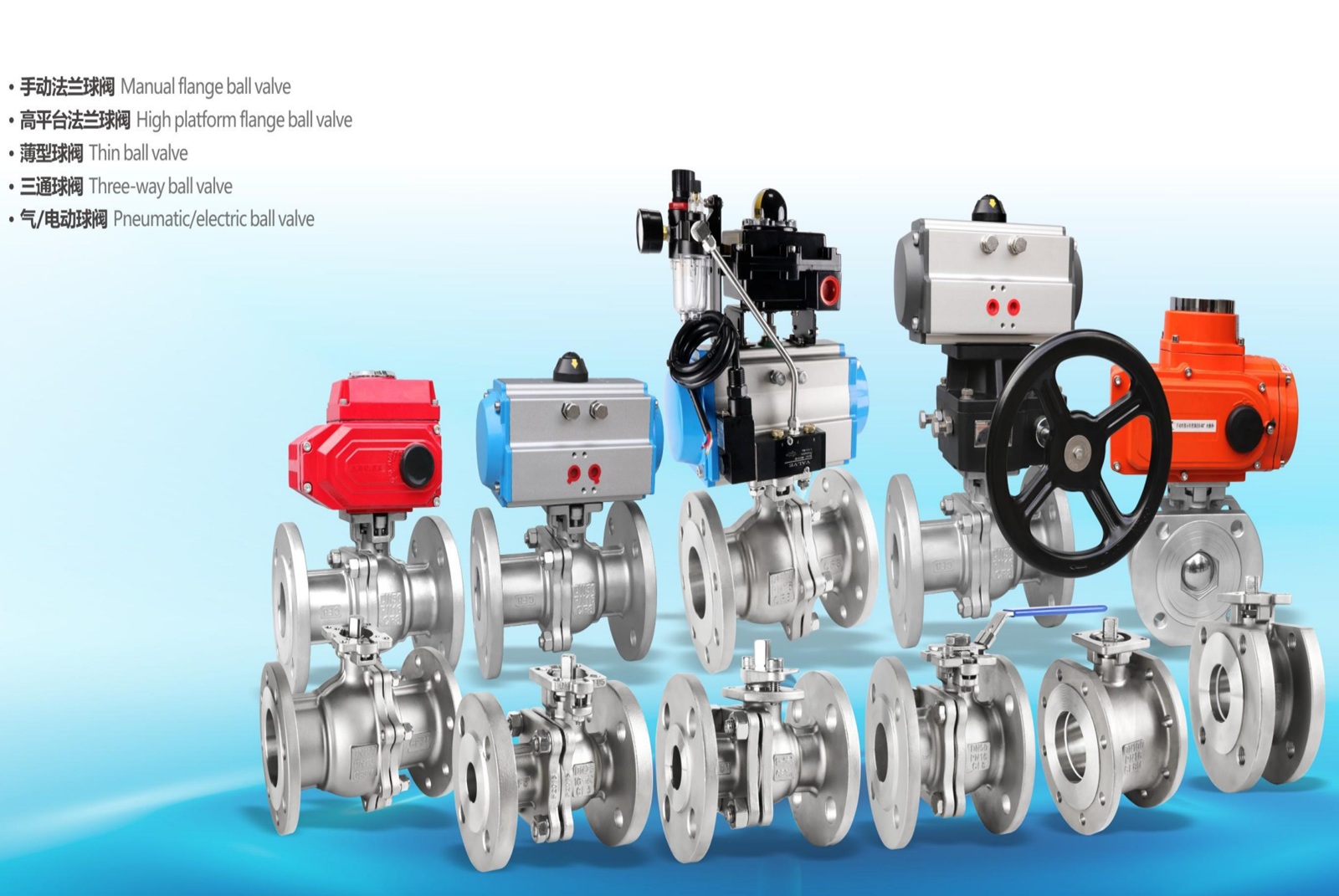
Valves are essential components in any piping system — controlling the flow of liquids, gases, and slurries. Choosing the wrong valve type can lead to poor performance, leakage, increased maintenance, or even system failure.
GTFI offers a complete range of industrial valves including ball valves, gate valves, globe valves, and butterfly valves in various materials (WCB, 304, 316, Duplex, Titanium) and pressure ratings (PN10 to PN420).
1. Overview of Valve Types
Ball Valve
- How it works: A ball with a hole rotates 90° to open/close flow. Quarter-turn operation.
- Best for: On/off control, gas and liquid applications
- Advantages: Quick operation, tight seal, low pressure drop, durable
- GTFI materials: WCB, 304, 316, Titanium, Duplex
Gate Valve
- How it works: A gate (wedge) moves up and down to open/close flow. Multi-turn operation.
- Best for: On/off service, pipelines, oil and gas
- Advantages: Low pressure drop, bi-directional, handles high pressure
- Disadvantages: Slow operation, not suitable for throttling
- GTFI materials: WCB, WC6, 304, 316
Globe Valve
- How it works: A disc moves perpendicular to the flow path. Multi-turn operation.
- Best for: Throttling and flow regulation, high-temperature applications
- Advantages: Excellent throttling capability, good shutoff
- Disadvantages: Higher pressure drop than gate or ball valves
- GTFI materials: WCB, WC6, LCB, 304, 316
Butterfly Valve
- How it works: A disc rotates 90° to open/close flow. Quarter-turn, compact design.
- Best for: Large-diameter pipes, water, sewage, ventilation
- Advantages: Compact, lightweight, low cost, fast operation
- Disadvantages: Not ideal for high-pressure or high-temperature
- GTFI materials: WCB, 304, 316, PTFE-lined
2. Comparison Table
| Feature | Ball Valve | Gate Valve | Globe Valve | Butterfly Valve |
|---|---|---|---|---|
| Operation | Quarter-turn | Multi-turn | Multi-turn | Quarter-turn |
| Best Function | On/Off | On/Off | Throttling | On/Off |
| Pressure Drop | Low | Very low | High | Moderate |
| Size Range | 1/4" - 24" | 1/2" - 48" | 1/2" - 24" | 2" - 72" |
| Cost | Moderate | Low-Moderate | Moderate-High | Low |
| Temperature Range | -196°C to 800°C | -29°C to 425°C | -29°C to 425°C | -29°C to 200°C |
| Sealing | Excellent | Good | Good | Good |
3. Application Recommendations
- Ball Valve: Gas pipelines, chemical processing, high-purity applications, quick shut-off
- Gate Valve: Water mains, oil pipelines, steam lines, infrequent operation
- Globe Valve: Flow control systems, boiler feedwater, cooling water, chemical injection
- Butterfly Valve: Large water pipes, sewage systems, HVAC, ventilation, food processing
4. Material Selection Guide
- WCB: General-purpose carbon steel, -29°C to 425°C
- 304 Stainless: Chemical, food, pharmaceutical, -196°C to 800°C
- 316 Stainless: Marine, chemical with chlorides, -196°C to 800°C
- Duplex: Seawater, high chloride, -40°C to 400°C
- Titanium: Highly corrosive environments, -40°C to 400°C
Valve Duty
Choose the valve by duty—on/off isolation, throttling, check function, or flow control—before comparing body style. Pressure, temperature, fluid compatibility, connection standard, and actuator requirements should then be matched to the service.
What to Confirm Before Ordering
- Define required flow rate, pressure or head, suction conditions, and the operating range rather than one single nominal point.
- Identify the fluid, temperature, viscosity, solids content, corrosiveness, and whether the service is clean, abrasive, or sanitary.
- For valves, specify the control or isolation duty, pressure class, connection standard, body material, seat/seal material, and actuation.
- Check motor power, efficiency, NPSH or suction conditions, installation orientation, and maintenance access for pumps.
- Confirm local pipe standards, replacement parts, seals, and compatibility with the existing system before purchase.
For a quotation request: For quotation requests, provide fluid type, flow, head/pressure, temperature, pipe size, material preference, connection standard, and quantity. A simple system diagram can remove significant ambiguity.
Need help matching equipment to a specific application? Provide the operating conditions, required quantity, destination, and key technical requirements when requesting a quotation.
❓ Frequently Asked Questions
A: Globe valves are the best choice for throttling applications. Ball and gate valves are not recommended for throttling as they can cause damage or poor control.
A: Gate valves use a wedge that moves up and down (multi-turn), while ball valves use a rotating ball (quarter-turn). Ball valves offer faster operation and better sealing.
A: Butterfly valves are the most cost-effective for large diameters (4" and above) due to their compact design and lightweight construction.
A: Butterfly valves are generally limited to 200°C. For higher temperatures, consider ball or gate valves with appropriate materials.
💬 Need help selecting the right valve for your application?
Talk to Our Experts →