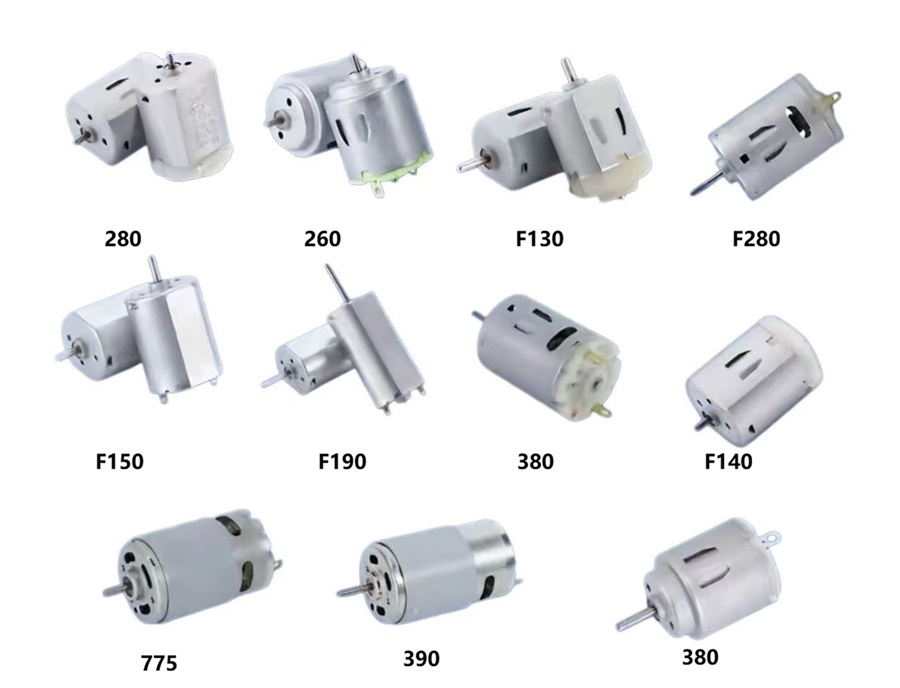
Brushless DC motors (BLDC) are becoming the preferred choice for many applications due to their superior efficiency, reliability, and performance. This guide helps you understand the key parameters and make the right selection for your project.
1. Brushless vs Brushed Motors – Key Differences
| Feature | Brushless (BLDC) | Brushed (DC) |
|---|---|---|
| Efficiency | 85–92% | 70–80% |
| Lifespan | 5,000–20,000+ hours | 1,000–3,000 hours |
| Maintenance | None (no brushes to replace) | Brushes need periodic replacement |
| Noise | Quiet | Noisier (brush friction) |
| Speed Control | Precise, wide range | Limited |
| Cost | Higher | Lower |
| EMI/Interference | Low | Higher (spark from brushes) |
2. Key Specifications to Consider
2.1 Voltage
Choose a motor voltage that matches your power source. GTFI brushless motors are available in:
- 3.7V – 7.4V: Wearable devices, small fans
- 12V – 24V: Small fans, pumps, power tools
- 48V – 72V: E-bikes, industrial equipment
- 110V – 230V AC: Industrial fans and appliances (with integrated driver)
2.2 Power and Torque
- GTFI 1204 Brushless: 12V, for small fans and pumps
- GTFI 1404 Brushless: 24V, for power tools and smart home appliances
- GTFI Industrial Brushless: Up to 5kW for heavy-duty applications
Higher voltage typically allows higher power output and better efficiency. For small fans and pumps, 12V is sufficient. For power tools and appliances, 24V or higher is recommended.
2.3 Speed (RPM)
Brushless motors can achieve speeds from a few hundred to over 50,000 RPM. Consider your application's speed requirements:
- Low speed (< 1,000 RPM): Direct drive for fans, pumps
- Medium speed (1,000–5,000 RPM): General purpose, appliances
- High speed (> 5,000 RPM): Power tools, drones, high-speed pumps
2.4 Size and Mounting
GTFI offers brushless motors in various form factors:
- Micro brushless: 8mm–20mm diameter for compact devices
- Standard brushless: 42–80mm frame for general applications
- Industrial brushless: Large frame for heavy-duty use
3. Applications and Recommendations
| Application | Recommended Model | Key Specs |
|---|---|---|
| Small Fans, Air Purifiers | 1204 Brushless | 12V, Low noise, Long life |
| Hair Dryers, Personal Care | 1404 Brushless | 24V, High speed, Compact |
| Power Tools (Drills, Grinders) | 1404 or custom brushless | 24–36V, High torque |
| Smart Home Appliances | 1204 / 1404 Brushless | 12–24V, Quiet operation |
| Industrial Fans (HVLS) | HDS Series PMSM | 220–380V, 0.37–1.5kW |
| E-bikes / Light EVs | Custom brushless | 48–72V, High efficiency |
4. Why Choose GTFI Brushless Motors?
- High efficiency: Up to 92% efficiency reduces power consumption
- Long lifespan: 5,000–20,000 hours with no brush replacement
- Low noise: Smooth operation suitable for noise-sensitive environments
- CE / RoHS certified: Compliance with international standards
- Full customization: Shaft, lead wire, coatings, and special windings available
- 1-year warranty: Peace of mind for your investment
Practical Selection Checklist
Electric motor selection is a system decision. Rated power is only one input; voltage, frequency, speed, torque, duty, starting method, mounting, enclosure, efficiency, and environmental conditions all affect whether a motor will perform reliably.
What to Confirm Before Ordering
- Define required shaft power and torque at the actual operating point rather than choosing only from the nominal machine load.
- Confirm voltage, frequency, phase, rated speed, pole count, mounting arrangement, and rotation direction.
- Check duty cycle, starting frequency, acceleration requirements, load inertia, and whether a variable-frequency drive will be used.
- Match enclosure and protection to dust, moisture, temperature, corrosive conditions, and installation location.
- Compare efficiency class, service factor where applicable, bearings, lubrication, spare parts, and maintenance access for lifecycle cost.
For a quotation request: For quotation requests, provide power, voltage, frequency, speed, mounting type, application, duty cycle, and quantity. A motor nameplate or equipment drawing is especially useful when replacing an existing unit.
Need help matching equipment to a specific application? Provide the operating conditions, required quantity, destination, and key technical requirements when requesting a quotation.
❓ Frequently Asked Questions
A: Yes. Brushless motors require an electronic speed controller (ESC) or driver to operate. GTFI provides integrated driver options for many models.
A: With proper use, brushless motors can last 10,000–20,000 hours. The main wear components are the bearings, which are easily replaceable.
A: Yes. GTFI offers IP55 and IP65 rated brushless motors for humid or dusty environments.
💬 Need help selecting the right brushless motor?
Talk to Our Engineers →