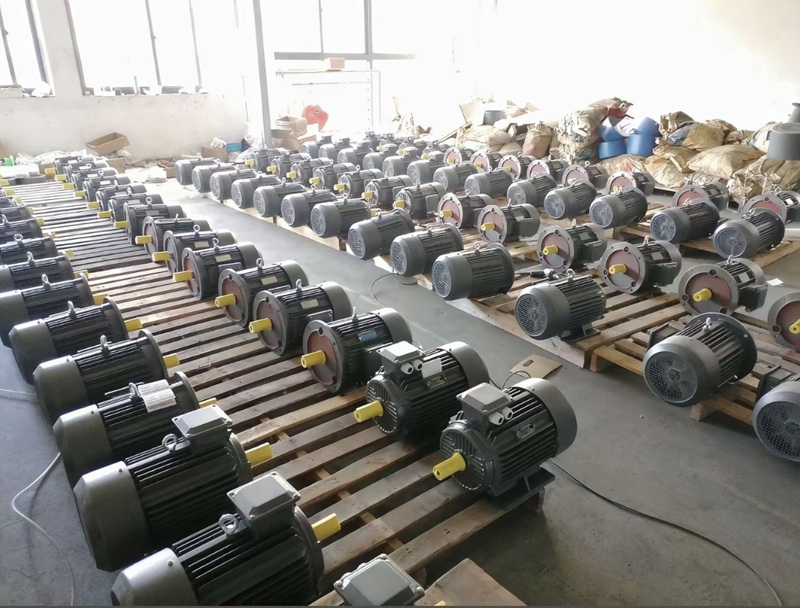
Industrial electric motors are the workhorses of modern industry. They power pumps, fans, conveyors, compressors, and countless other machines. Choosing the right motor efficiency class (IE3 vs IE4) can significantly impact your energy costs over the life of the motor.
1. Motor Efficiency Standards Explained
International Efficiency (IE) standards define motor efficiency levels:
- IE1 (Standard): ~80% efficiency. Basic motors for non-critical applications.
- IE2 (High): ~85% efficiency. General industrial use.
- IE3 (Premium): ~90% efficiency. The minimum standard for many industries. GTFI IE3 motors deliver significant energy savings.
- IE4 (Super Premium): ~93% efficiency. The highest standard for efficiency. GTFI IE4 motors offer maximum energy savings for continuous-duty applications.
2. IE3 vs IE4 — Key Differences
| Feature | IE3 (Premium) | IE4 (Super Premium) |
|---|---|---|
| Efficiency | ~90% | ~93% |
| Energy Savings vs IE1 | 10% | 15% |
| Upfront Cost | Moderate | 20-30% higher |
| Payback Period | 1-2 years | 1-3 years |
| Best For | General industrial use | Continuous-duty, critical applications |
3. Power Range — 0.75kW to 500kW
GTFI industrial motors cover the full range from 0.75kW to 500kW. Smaller motors (<15kW) are typically used for pumps, fans, and light conveyors. Larger motors (>100kW) are used for compressors, mills, and heavy machinery.
4. Mounting Types and Enclosure
- B3 (Foot Mounted): Most common, bolted to a base plate
- B5 (Flange Mounted): Flange mounted, used where space is tight
- B14 (Face Mounted): Face mounting for specific applications
- B35 (Combined): Foot + flange for maximum versatility
- IP55: Standard industrial, dust-protected and water-jet protected
- IP65: Fully dust-tight and water-jet protected for harsh environments
5. Which Efficiency Class Should You Choose?
- Choose IE3: For most industrial applications where upfront cost is a concern. IE3 offers excellent efficiency with moderate upfront cost.
- Choose IE4: For continuous-duty applications (running 24/7), where energy savings will quickly pay back the higher upfront cost. Also for applications with strict energy regulations.
Practical Selection Checklist
Electric motor selection is a system decision. Rated power is only one input; voltage, frequency, speed, torque, duty, starting method, mounting, enclosure, efficiency, and environmental conditions all affect whether a motor will perform reliably.
What to Confirm Before Ordering
- Define required shaft power and torque at the actual operating point rather than choosing only from the nominal machine load.
- Confirm voltage, frequency, phase, rated speed, pole count, mounting arrangement, and rotation direction.
- Check duty cycle, starting frequency, acceleration requirements, load inertia, and whether a variable-frequency drive will be used.
- Match enclosure and protection to dust, moisture, temperature, corrosive conditions, and installation location.
- Compare efficiency class, service factor where applicable, bearings, lubrication, spare parts, and maintenance access for lifecycle cost.
For a quotation request: For quotation requests, provide power, voltage, frequency, speed, mounting type, application, duty cycle, and quantity. A motor nameplate or equipment drawing is especially useful when replacing an existing unit.
Need help matching equipment to a specific application? Provide the operating conditions, required quantity, destination, and key technical requirements when requesting a quotation.
❓ Frequently Asked Questions
A: For continuous-duty applications, IE4 motors typically pay back the extra cost within 1-3 years through energy savings.
A: 1.5 years for industrial motors, 1 year for micro motors.
A: Yes, GTFI offers full customization including shaft length, gear ratio, and lead wires.
💬 Need help selecting the right motor?
Talk to Our Experts →